


What Is

CUChoice, an initiative sponsored by American Share Insurance (ASI), is focused on expanding the availability of private deposit insurance as an option within the state charter system. The effort is about encouraging growth and ensuring individual states allow credit unions to choose the structure that best supports their mission and membership.

TAKE ACTION
Support the CUChoice Campaign
Credit unions deserve the opportunity to evaluate all viable deposit insurance options. American Share Insurance is working with credit union leaders, regulators, and policymakers to preserve private deposit insurance as a free-market alternative and strengthen the state-chartered credit union model.
Learn how private deposit insurance works, why it matters, and how your credit union can help support greater choice for the future of the credit union movement.
YES, I WANT MORE INFORMATION ON ASI ADVOCACY EFFORTS
CUbroadcast Exclusive
GAC 2026 interview with Mike Lawson of CU Broadcast, Jennifer Kelly, ASI Vice President of Advocacy, and Kurt Loose, CPA, SVP and Chief Operations Officer.
Strengthen your state charter with choice.
In states that permit a private insurance alternative, the percentage of state-chartered credit unions rose from 42.9% to 47.4% from 2000-2024. Simultaneously, the percentage of state chartered credit unions decreased in states that did not permit a private insurance option. Choice strengthens the state charter.
— Download ASI Private Insurance Sheet
Over 50 Years. Zero Member Losses.
Since 1974, no ASI-insured depositor has lost money in an insured account.
State-Based Supervision
Allows for regulation by the state authority but is not subject to duplicate regulation and examination by federal agencies.
Long-Term Asset Growth
Privately insured credit unions grow at nearly the same rate as federally insured institutions — demonstrating sustained member confidence.
Strong Reserves and Loss Paying Capacity
ASI maintains reserves to insured shares at a rate that is nearly 10 times that maintained by the federal program. Loss reserves are independently evaluated and assessed on an annual basis.
Hear from our Advocacy Expert
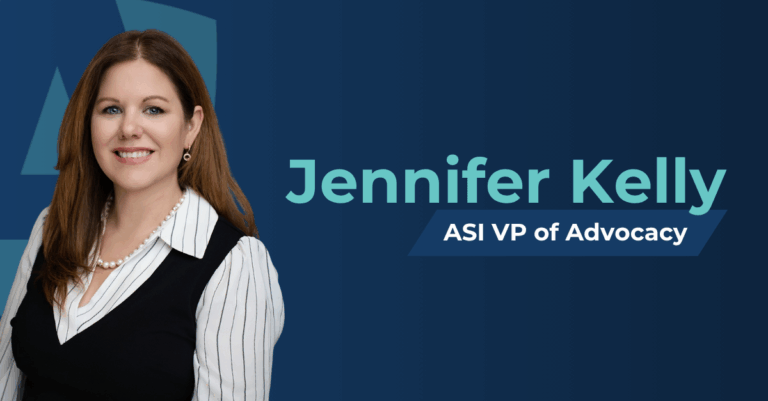
“The value of deposit insurance choice extends beyond structure — it strengthens the state charter and supports the long-term growth of credit unions and the communities they serve.” — Jennifer Kelly, VP of Advocacy
Learn more about CUChoice
Collaborative Oversight Model
ASI serves as an insurer, not a supervisory authority. State credit union regulators remain the primary regulators of insured institutions. ASI works alongside them without replacing or duplicating their authority, coordinating closely and participating in joint examinations whenever possible. This collaborative approach reinforces safety and soundness, reduces duplication, supports the early identification of potential issues, and ensures regulatory decision making remains with the appropriate state authority. In addition, ASI works directly with credit unions to understand their individual business models and operational needs, recognizing that maintaining a strong insurance fund is aligned with the long-term success of the credit unions that collectively own it.
Private Deposit Insurance FAQs
Q. What are the differences between primary deposit insurance through the NCUA vs. ASI?
A. ASI’s coverage is more comprehensive than what is provided by the federal government. ASI’s protection is per account, not per member, meaning much more of your members’ deposits can be insured. Rather than a “one-size-fits-all” approach, we work with our member credit unions and state regulators to develop flexible programs that focus on meeting consumer needs and sustaining charters. Unlike the NCUA, at the heart of our business model is our belief in the right of credit unions to meet the needs of their members without undue outside interference in day-to-day operations. Also, ASI’s equity ratio — the ultimate measurement of our financial position — is well above that of our counterpart in the federal government.
Many of our partners prefer private insurance over federal regulation because it allows flexibility to develop solutions to meet the needs of their members and offers more protection by insuring up to $250,000 for each and every account, compared to the federal insured cap at $250,000 per member.
Also, ASI primary insured credit unions have the option of adding one of our excess insurance programs very quickly through our subsidiary ESI. By adding an excess insurance program on top of your current primary insurance, you can more easily stand out in your marketplace, which can be a strong differentiator in times like these. Through ESI credit unions may add up to $10,000,000 of additional deposit insurance to primary coverage limits on select classes of accounts such as Business Savings and Public Funds (Not available in the state of Washington).
Q. How many financial institutions use private insurance through ASI?
A. ASI currently insures the deposits of nearly 100 credit unions, and 1.35 million members in ten states, with total insured shares of almost $20 billion.
Q. How long has ASI been in business?
A. ASI has been protecting credit unions and their members since 1974, and no member has ever lost money in an ASI-insured credit union.
Q. Is ASI regulated or audited?
A. ASI is licensed by the Ohio Department of Insurance and dual-regulated by the Ohio Departments of Insurance and Commerce. Annually, a “big four” accounting firm audits the ASI’s financial statements, and an independent actuary attests to the sufficiency of ASI’s loss reserves.
Q. How does ASI mitigate against potential risks/losses?
A. The profile of our member credit unions, where they typically hold around 95% retail deposits, greatly lessens the risk of a depository “run.” Compare this to the situation at Silicon Valley Bank, for example, where the vast majority of deposits were uninsured commercial accounts.
Because of ASI’s risk management and workout programs, our loss ratio (losses compared to at-risk assets) is less than 3.0% — meaning our practices have been highly successful when “saving” or finding a good home for troubled members.
ASI’s investment duration is relatively short, and our practice is to keep a significant amount of cash on hand. We also have access to liquidity from several large financial institutions, including the Federal Home Loan Bank.
ASI’s primary deposit insurance is backed by reserves set aside, the assets of the organization, available lines of credit from three separate financial institutions, and the organization’s capital. Additionally, the backing of the entirety of ASI’s member credit unions would provide additional funding, should it be necessary.
Q. Can any credit union obtain coverage through ASI?
A. State chartered credit unions have the option of converting from federal to private deposit insurance through ASI. However, not every credit union that applies for ASI membership is approved. We carefully underwrite each applicant credit union that wishes to convert from federal deposit insurance to private deposit insurance. We utilize an extensive underwriting program that includes analysis of the applicant credit union’s financial position and financial trends over the past several years. We understand that the quality of a credit union’s financial statements cannot be based solely on a point-in-time assessment but must incorporate a review and understanding of trends — not just to see where a credit union has been recently, but to determine the likely forward-looking assessment of the institution’s condition. We also review operating policies and strategic plans and budgets to assess management’s plans and projections, as well as the governing controls established by the applicant credit union’s Board of Directors. Each primary applicant is also subject to a thorough on-site examination, including a review of accounting records, sampled loan files, and verification of cash and investment accounts.
State Provisions
The following are provisions in state credit union acts* that allow for an alternative to NCUSIF:
California:
Cal Fin Code § 14858 (2012) § 14858. Insurance of members’ share accounts
Every credit union shall apply for and obtain insurance as provided for by Title II of the Federal Credit Union Act (12 U.S.C. Sec. 1781 and following), or other insurance or guaranty of shares that is not unsatisfactory to the commissioner.
Idaho:
Idaho Code Ann. § 26-2153 (2012) § 26-2153. Share and deposit insurance
(1) Not later than January 1, 1986, a state-chartered credit union shall apply for and obtain insurance on shares and deposits as provided by the national credit union administration under title II of the federal credit union act (12 U.S.C. section 1781 et seq.), or alternatively, a form of comparable insurance approved by the director.
Illinois:
205 Ill. Comp. Stat. § 305/58 (2012) § 205 ILCS 305/58. (As amended by P.A. 97-133, effective January 1, 2012) Share insurance Sec. 58. (1)
Each credit union operating in this State shall insure its share accounts with the NCUA, under 12 U.S.C. 1781 to 1790 or with such other insurers as may be jointly approved by the Secretary of Financial and Professional Regulation Institutions and the Director of Insurance.
Indiana:
Ind. Code § 28-7-1-31.5 (2012) 28-7-1-31.5. Required share insurance.
(a) Before transacting business in Indiana, a credit union shall insure its shares and other deposits with the National Credit Union Share Insurance Fund, or a similar insurance company approved by the department.
Montana:
Mont. Code § 32-3-611 (2011) 32-3-611 Share insurance.
(1) Each credit union shall maintain insurance on its share accounts under the provisions of Title II of the Federal Credit Union Act or through a legally constituted insurance plan approved by the commissioner of insurance and the department of administration.
Nevada:
Nev. Rev. Stat. § 678.755 (2012) 678.750. Insurance of members and accounts.
3. A credit union must apply to the commissioner for approval of a plan of insurance for members’ accounts, either pursuant to the Federal Credit Union Act of 1934, as amended, (12 U.S.C. §§ 1781 et seq.), or under a contract of insurance issued by an insurer, which must be approved by the commissioner and the commissioner of insurance pursuant to NRS 678.755.
Ohio:
Ohio Rev. Code §1733.041 (2012) § 1733.041. Insurance protection for accounts
Each credit union operating under this chapter or otherwise authorized to do business in this state shall obtain insurance for the protection of their members’ accounts. Such share guarantee insurance may be obtained from the national credit union administration operating under the “Federal Credit Union Act,” 84 Stat. 994 (1970), 12 U.S.C. 1751, and any amendments thereto, or from the national deposit guaranty corporation, established under Chapter 1761 of the Revised Code, or from any insurer qualified under the laws of this state to write such insurance.
Texas:
Texas Admin. Code. §95.101. Share and Depositor Insurance Protection
(a) Each credit union incorporated under the Act or otherwise authorized to do business in this state shall obtain share and deposit insurance for the protection of its members’ accounts. Such share and deposit guarantee insurance may be obtained from the NCUA through the NCUSIF or from an insuring organization approved by the commissioner, with the advice and consent of the commission.